History of the school
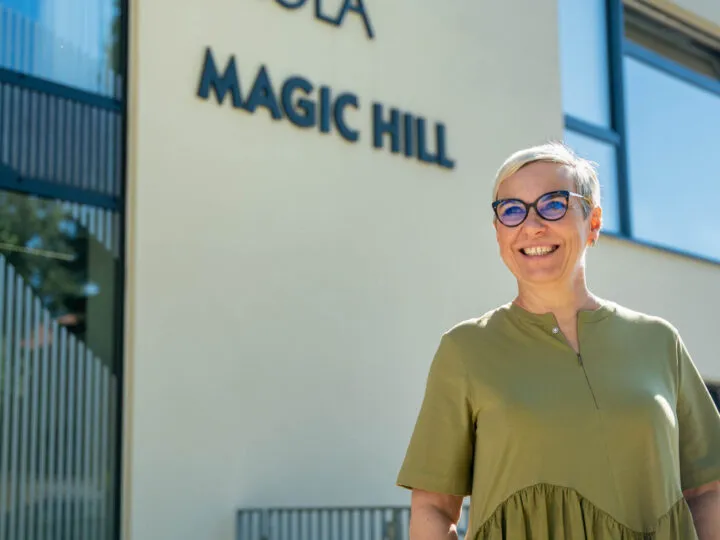
Excerpts from an interview with Martina Olivová, founder of the school, for Premium Reportér magazine
How did you come up with the idea of starting a private preschool and elementary school?
In 2004, I was looking for a kindergarten for my son where the children would receive more than the standard care available at the time. Not only were there no places available in kindergartens, but what they did offer was rather dismal – lots of children, one tired teacher, no activities or trips, and English lessons with native speakers were something I could only dream of. So, after visiting several places where I really didn’t want to send my child, I decided that I would have to open my own…
Was it similar with school?
After two years of running the kindergarten, I realized that I had only solved the problem temporarily. I was faced with the same problem, namely which elementary school to enroll my son in, or rather where to send the children from our kindergarten. I went around the schools again, with the same result—an outdated approach, we’ll teach the children to read and write, what else would you like, overcrowded classrooms. So I set out to build a primary school. We renovated an old, disused building in the center of Říčany and started operating a primary school in 2006.
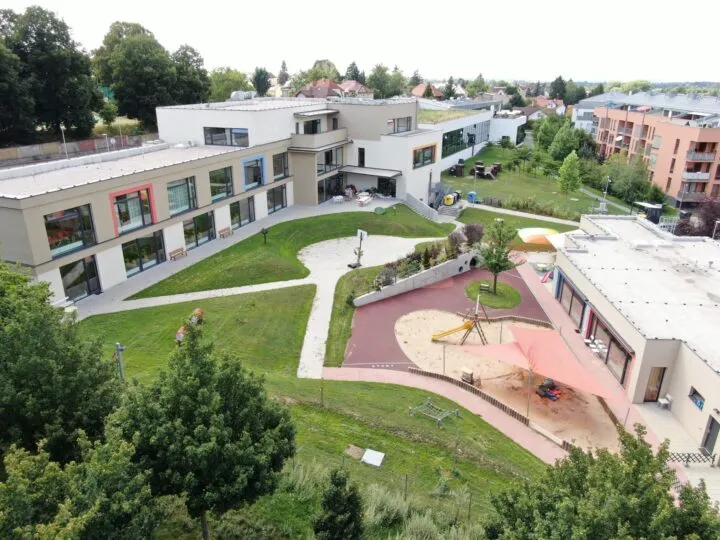
Gradually, the school and kindergarten grew, and the space was no longer sufficient. At the same time, we began to think about expanding the school to include a second stage. In 2014, I joined forces with two other investors, and together we began to prepare the construction of a modern elementary school and kindergarten complex on a greenfield site in the center of Říčany.
How are your kindergarten and school different?
I would say there are many things. We have come a long way from our initial intention to open a kindergarten and then a school where children would enjoy themselves and where not only the children but also the teachers would enjoy their work. Gradually, I also began to realize my potential in education, abandoned the idea of returning to my field, and continued my education in the field of education. At the beginning, I had a relatively simple idea, motivated more by what a kindergarten or school in the 21st century should not look like. But building the whole concept with a vision and strategy, the direction of the school in many areas – that took time, experience, knowledge, and, of course, a team of people who would see it the same way.
What do children mainly learn?
Our school is based on a balanced approach, which means a high-quality knowledge base, in particular the comprehensive and interconnected building of knowledge and critical thinking. An excess of information, memorization without context, nonsensical requirements, the same demands on everyone, the same amount of facts that we may remember for a while but are of no further use to us. We think about what children will need most. That is why we base our school on openness, teach through projects and themes, follow current topics, try to connect them with practice, and invite interesting personalities, experts, and people with different stories to our schools.
Cooperation, group work, and searching for answers together. We find out what they already know and what they want to find out for themselves, what interests them. We teach them how to put knowledge into context, how to deal with mistakes, how to critically evaluate information, how to work with feedback, how to describe and evaluate themselves and others, how to argue, discuss, and overcome obstacles. The overall atmosphere at school is equally important, and building good relationships is key. If children and teachers do not feel comfortable at school, enjoy being there, cooperate, and experience success and joy, then we cannot expect any internal motivation, and without that, there is no learning, at least not in the long term.
What are your advantages?
Compared to many other schools, we have the advantage of having a small number of children in each class, usually fifteen, and twenty-two in the second grade, so we can devote our attention to the children. We divide some lessons, sometimes there are two teachers in the classroom at the same time, and we also have teaching assistants. This allows us to get to know each child and their needs and try to adapt to them. The school also employs native speakers, teachers from the United States, Canada, and even South Africa, for example. The environment is bilingual, and it is natural for children to absorb a foreign language from kindergarten onwards.
TEACHERS MUST LEARN TOO
Today’s generation of children needs to learn to respond and adapt, and they can only do that with the skills we teach them in school, which often means learning alongside them. Not all teachers accept the fact that they too must learn. That is why we place great emphasis on the professional and personal development of our teachers.
How does a typical school and kindergarten day differ from “normal” schools and kindergartens?
The environment in our school is stimulating and friendly. There are no bells, but the children still know when and where they need to be ready for class. Many activities and lessons take place together within grades or different classes or the whole school. We have joint meetings, the children present the results of their work to each other, they motivate each other, and they want to learn. Teachers plan lessons together, evaluate them, and reflect on them in subsequent steps. At the same time, however, it is important that the main activity is focused on the children; we are moving away from the model of the teacher standing in front of the class and giving a monologue. We do not give grades, but we evaluate the children using a sophisticated system of verbal formative assessment.
And do they only learn in classrooms?
No. Much of the teaching takes place outside of traditional classrooms. We have adapted the building for this purpose and teach in the library, in the hallways, in the school laboratory, in the garden, and in the outdoor classroom. We have also built a school farm as another place for learning about the future. Nature conservation and sustainable development are also important to us, so the children go there together, not only to learn, but also to help, to gain knowledge and skills about nature right in the middle of it, in the middle of the garden and the forest.
What do you want the children to take away from kindergarten and school?
Personal responsibility for their learning and a positive attitude towards it, the realization that learning is fun, that I am doing it for myself, and that learning does not end when I leave school, but that it is necessary to continue learning throughout my life. And then also that they take away the values that we share as a school and that are part of our school’s philosophy—respect, esteem, responsibility, but also empathy and helpfulness.
What are your plans for the future of the school and kindergarten?
We have plenty of plans for improvement and quality enhancement. The main area is definitely human resources; finding, training, and developing the teaching team is a never-ending task. We also want to focus on environmental activities and sustainable development. We are part of the ECO School program, and our school farm is an exemplary permaculture project and an award-winning natural garden. In addition, we have also received a bronze certificate from the Truly Healthy School program, and we are striving to make progress in the area of high-quality, modern, and healthy nutrition.